

The Andaman Islands are known for their tropical beaches and coral reefs, but they also contain some of India's most significant geological landmarks. The archipelago is home to an active volcano, a dormant volcanic island, and a rare mud volcano, each representing a different type of volcanic formation.
This guide explains how these volcanoes were formed, where they are located, what makes each one different, and the information travellers should know before planning a visit.
Quick Answer
The Andaman Islands have three major volcanic attractions, each formed through a different geological process.
- Barren Island – An active volcano in the Andaman Sea.
- Narcondam Island – A dormant volcanic island known for its rich biodiversity.
- Baratang Mud Volcano – A mud volcano created by the release of underground gases.
Although they are all referred to as volcanoes, they differ in their formation, landscape, and visitor access.
Why Are There Volcanoes in the Andaman Islands?
The Andaman Islands lie along the Andaman–Sunda volcanic arc, one of the world's active tectonic regions. Over millions of years, the movement of the Indian Plate beneath the Burma (Myanmar) Microplate generated heat and magma beneath the Earth's surface, leading to the formation of volcanic islands such as Barren Island and Narcondam Island.
The Baratang Mud Volcano has a different origin. Instead of molten rock, underground natural gases push mud and water through small vents, creating low mud cones and gentle bubbling formations.
These geological processes have shaped one of India's most diverse volcanic landscapes, where both lava volcanoes and mud volcanoes exist within the same island chain.
Barren Island
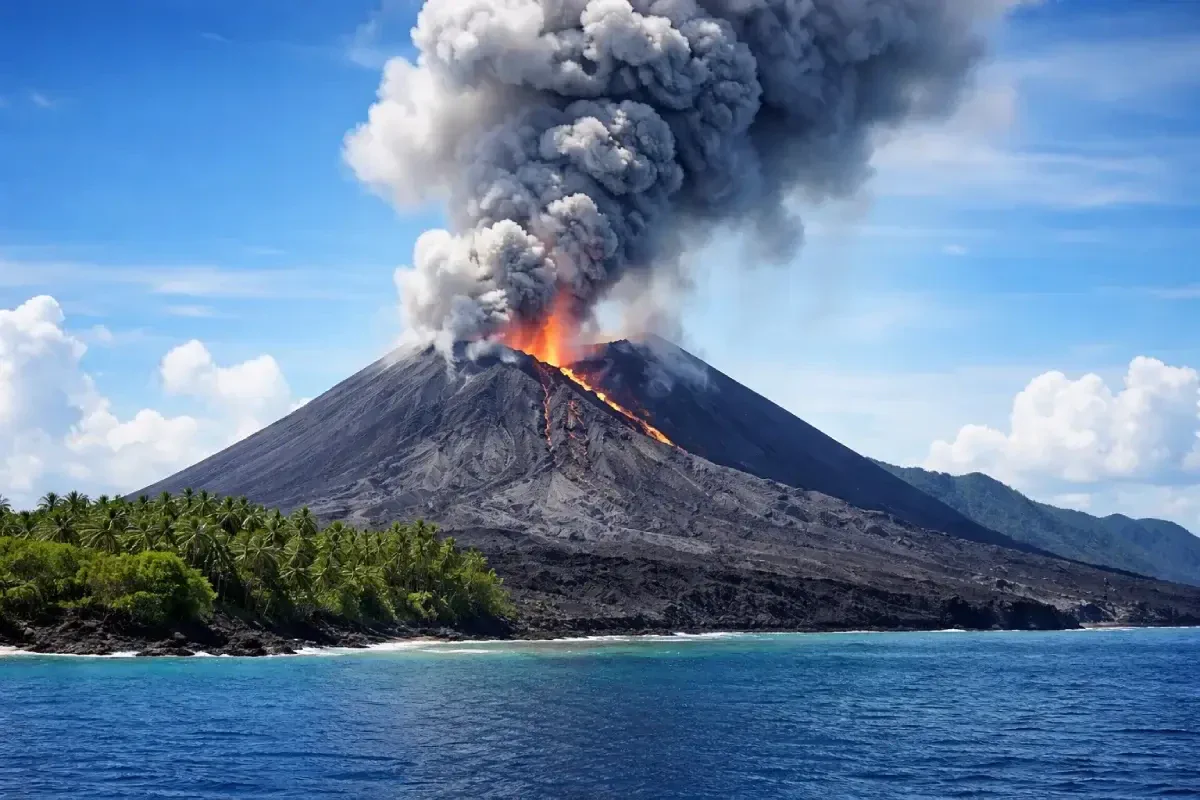
Barren Island is a volcanic island situated about 135 kilometres northeast of Port Blair in the Andaman Sea. It is uninhabited and forms part of the Ritchie's Archipelago, although it lies well away from the islands commonly visited by tourists.
The island is dominated by a large volcanic cone surrounded by rugged cliffs and hardened lava fields, creating a landscape unlike any other in the Andaman Islands.
A Brief History
Historical records show that the first documented eruption of Barren Island occurred in 1787. Since then, the volcano has gone through several periods of activity separated by quieter phases.
Today, scientists continue to study the island to better understand volcanic processes and monitor changes within the region.
Can Tourists Visit Barren Island?
Landing on Barren Island is not permitted because of safety regulations and environmental protection measures.
However, authorised boat excursions travel around the island, allowing travellers to observe its volcanic landscape from the sea. Depending on weather conditions and volcanic activity, the crater and surrounding lava formations may be clearly visible during the journey.
Best Time to Plan a Visit
Boat trips usually operate between November and April, when sea conditions are calmer and visibility is generally better. Departures remain dependent on weather and operational approvals.
Travel Tip
Book your sightseeing cruise in advance, especially during the peak tourist season, as departures are limited and schedules may change depending on sea conditions.
Scuba Diving Around Barren Island
The waters surrounding Barren Island are considered among the best scuba diving locations in the Andaman Islands. Volcanic rock formations, steep underwater slopes, and healthy coral reefs create an environment that supports a wide variety of marine life.
Divers frequently encounter reef sharks, manta rays, eagle rays, tuna, barracudas, sea turtles, and large schools of tropical fish. The combination of volcanic terrain and thriving coral ecosystems makes every dive different from conventional reef dives found elsewhere in the archipelago.
Who Can Dive Here?
Because of the distance from Port Blair and the nature of the dive sites, most expeditions are designed for certified divers. Dive operators assess sea conditions before every trip and may modify or cancel departures if conditions are unsuitable.
Best Season for Diving
Underwater visibility is generally at its best between November and April, when calmer seas provide favourable diving conditions. Visibility and marine life sightings may vary depending on weather and ocean conditions.
Travel Tip
Most diving expeditions begin early in the morning and operate on a limited schedule. Advance booking is recommended, particularly during the peak tourist season.
Narcondam Island
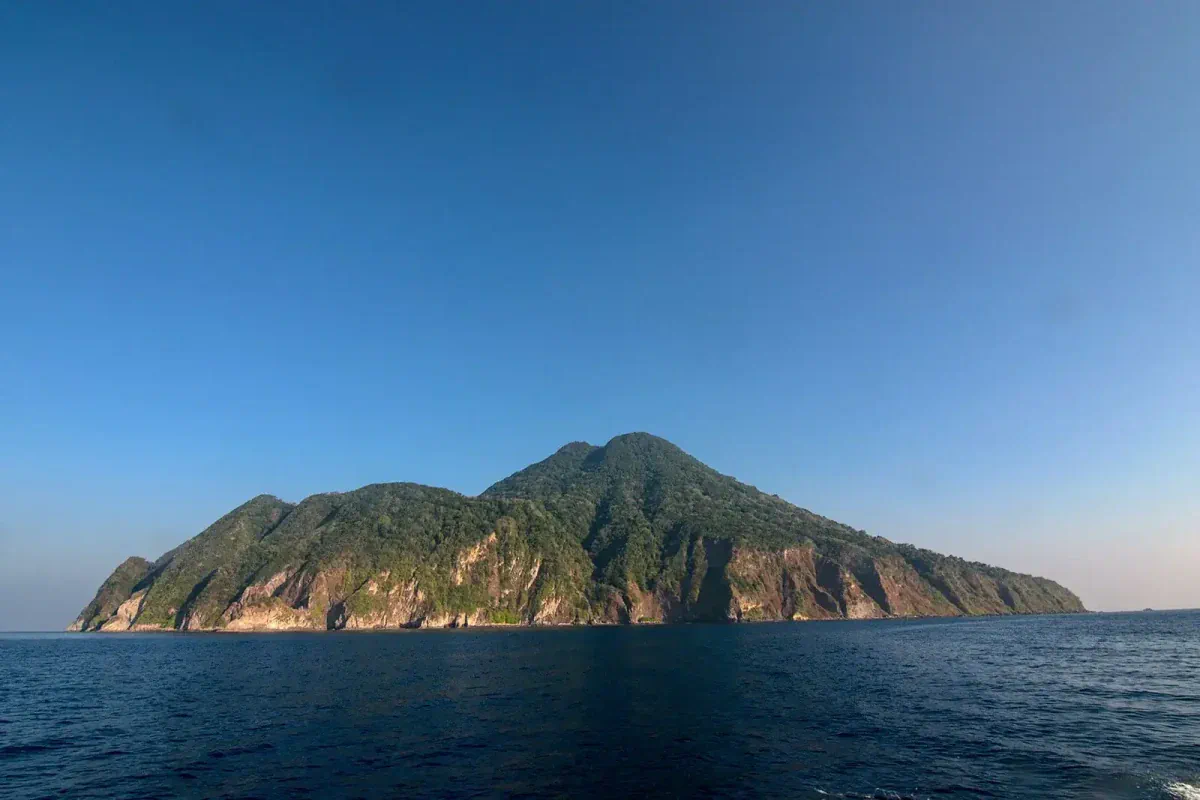
Located in the northern part of the Andaman and Nicobar archipelago, Narcondam Island is a dormant volcanic island known today for its ecological importance rather than volcanic activity.
Its dense forests provide the only natural habitat of the Narcondam Hornbill, an endemic bird species found nowhere else in the world. The island is also home to several native plant and animal species that contribute to its conservation value.
Why Is Narcondam Island Protected?
Narcondam Island has been designated as a protected wildlife sanctuary to conserve its fragile ecosystem and endemic species. Strict environmental regulations help preserve its biodiversity and minimise human disturbance.
Can Tourists Visit Narcondam Island?
No. Entry is restricted to authorised researchers, conservation teams, and government officials. As a result, Narcondam Island is not included in regular Andaman tourism itineraries.
Baratang Mud Volcano
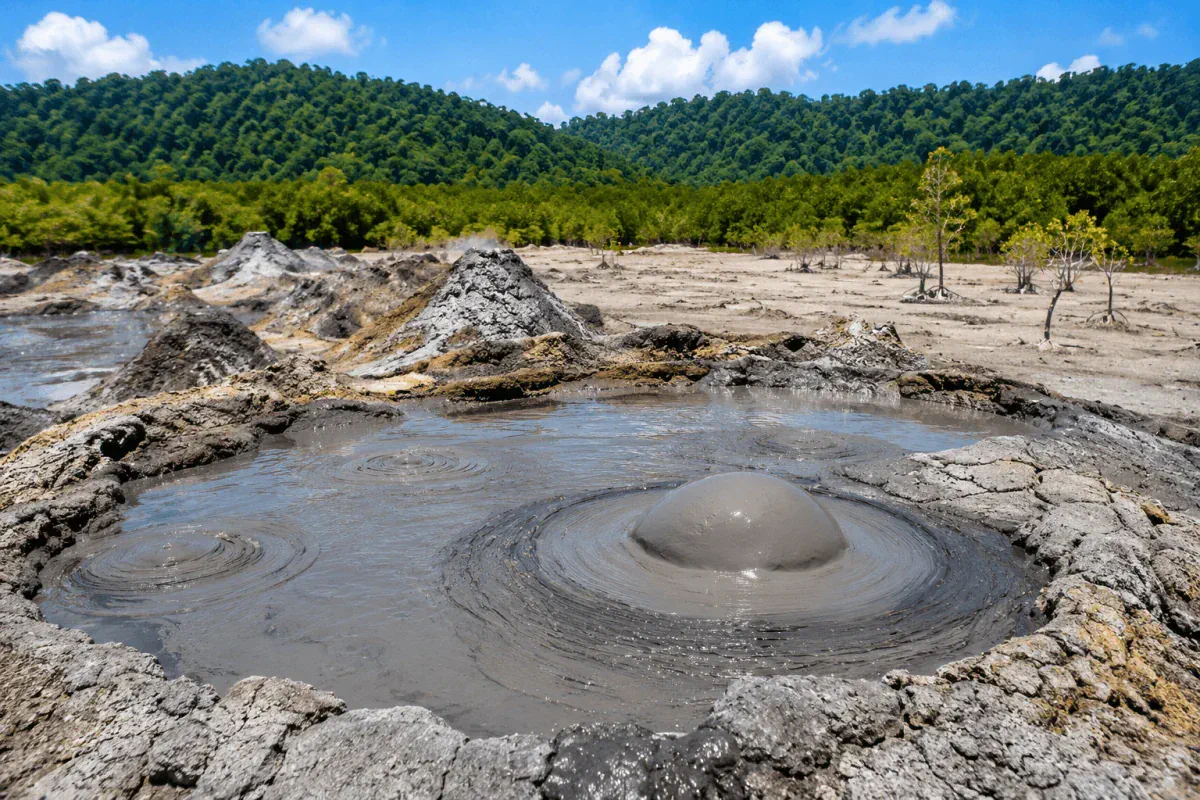
The Baratang Mud Volcano is one of India's few accessible mud volcanoes. Instead of erupting molten rock, it releases mud, water, and natural gases through small openings in the ground. This continuous process gradually forms low mud cones and shallow vents.
Situated on Baratang Island, the site is one of the region's lesser-known geological attractions and is commonly included in Baratang sightseeing itineraries.
How Is a Mud Volcano Formed?
Unlike conventional volcanoes, a mud volcano is not connected to rising magma. Underground gases build pressure beneath the surface and force a mixture of mud, water, and sediments upward through natural cracks.
The result is a constantly changing landscape where fresh mud deposits and small bubbling vents may appear over time.
How to Reach the Baratang Mud Volcano
The Mud Volcano is about 7 kilometres from Baratang Jetty. After arriving at Baratang from Port Blair by road and ferry, visitors continue by vehicle before taking a short walk through a forest trail to reach the site.
Many travellers visit the Mud Volcano alongside the Limestone Caves, making it a convenient addition to a full-day excursion.
Best Time to Visit
The most comfortable period to visit is between October and May, when weather conditions are generally suitable for road travel and outdoor sightseeing. During the monsoon season, heavy rainfall can make the walking trail muddy.
Travel Tip
Wear comfortable walking shoes, carry drinking water, and allow enough time to explore the other attractions included in a Baratang day trip.
Which Volcano Can You Visit?
Each volcanic attraction has different visitor access.
- Barren Island can be viewed through authorised sightseeing cruises and scuba diving expeditions, but landing is not allowed.
- Narcondam Island remains closed to regular tourism because of conservation regulations.
- Baratang Mud Volcano is open to visitors and is easily accessible during a Baratang day trip.
Your choice depends on the experience you're looking for. If you want to observe a volcanic island from the sea, Barren Island is the best option. If you prefer a site that can be explored on foot, the Baratang Mud Volcano is the more accessible choice.
Planning Your Volcano Tour
The best way to experience the volcanic attractions of the Andaman Islands depends on your interests, travel schedule, and the time available.
- Choose Barren Island if you're interested in offshore sightseeing or scuba diving.
- Visit the Baratang Mud Volcano if you want to explore a rare geological site that can be reached during a day trip from Port Blair.
If you're spending 5–7 days in the Andaman Islands, it's possible to combine a Baratang day trip with other popular destinations such as Havelock Island, Neil Island, and Port Blair without extending your itinerary.
Frequently Asked Questions (FAQs)
1. How many volcanoes are there in the Andaman Islands?
The Andaman Islands are known for three major volcanic attractions: Barren Island, Narcondam Island, and the Baratang Mud Volcano.
2. Which is India's only active volcano?
Barren Island is India's only active volcano and is located in the Andaman Sea.
3. Can tourists land on Barren Island?
No. Landing is prohibited. The island can only be viewed through authorised sightseeing cruises or scuba diving expeditions.
4. Is Narcondam Island open for tourism?
No. Entry is restricted to authorised researchers and government personnel to protect the island's ecosystem.
5. What is the difference between a mud volcano and a lava volcano?
A lava volcano erupts molten rock, while a mud volcano releases mud, water, and natural gases through openings in the ground.
6. How can I visit the Baratang Mud Volcano?
It can be reached on a day trip from Port Blair, followed by a short drive and a forest walk from Baratang Jetty.
7. When is the best time to explore the volcanoes?
The most favourable period is October to April, when weather and sea conditions are generally suitable for sightseeing and outdoor activities.
8. Can beginners scuba dive around Barren Island?
Most dive trips are planned for certified divers because of the offshore location and diving conditions. Individual operators can advise on experience requirements.
9. Can I visit all three volcanoes during one holiday?
You can include Barren Island and the Baratang Mud Volcano in the same trip, but Narcondam Island is not accessible to regular tourists.
10. Why are the volcanoes of the Andaman Islands important?
They represent different types of volcanic activity and help explain the geological evolution of the Andaman archipelago.


